
Feature
- VISIT YAMAGATA
- Feature
- [Workshop] Takase Agricultural School! Learn from Safflower
[Workshop] Takase Agricultural School! Learn from Safflower


Takase Agricultural School is an experiential learning program that teaches through the use of safflower, the official flower of Yamagata Prefecture.
By experiencing farm work and participating in various workshops, you will be able to appreciate the blessings of nature and have a great opportunity to think deeply about the future of agriculture, the preservation of traditional practices, and Japanese heritage that is close to home.
Now, let us introduce you to the specific training programs.
1. The deep connection between Yamagata Prefecture and safflower
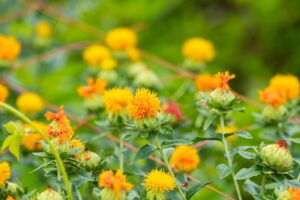
Safflower is the prefectural flower of Yamagata.
Safflower was once said to be worth 100 times more than rice and 10 times more than gold, making it an extremely luxurious commodity.
Yamagata safflower is of very high quality and known as “Mogami safflower,” and was transported to Kyoto by boat on the Mogami River.

The safflowers that were transported to Kyoto were used to make Nishijin textiles, dye for cosmetics, and as medicine.
The wealth and glamorous Kamigata culture brought by the safflower trade still remains in Yamagata today.

These include the storehouses that still remain within Yamagata City, the Hina dolls that remain in old houses, and omizuke (Omi pickles) and imoni (taro stew), which are indispensable on the Yamagata dining table.
Due to the spread of chemical dyes and the import of cheap Chinese safflower, domestic safflower production has decreased.
However, safflower is still grown in the Mogami River basin, and efforts are being made to preserve it as a traditional flower.
The Takase district of Yamagata City, which we will introduce this time, is also an area that is working hard to preserve safflower culture for future generations.
2. What is Takase Agricultural School?
・Yamagata City Takase District
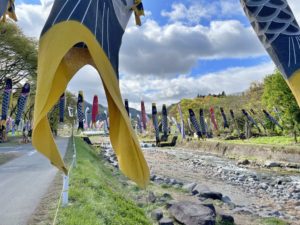
The Takase district is located in the eastern part of Yamagata City at the foot of the Ou Mountains, with the Takase River, a tributary of the Mogami River, flowing east to west.
Takase Station on the JR Senzan Line is located in the center of the district, and it takes about an hour by train to reach Sendai city.
The Takase area has been continuously cultivating safflower since the 1950s, and is known as “Takase, the Village of Safflower,” and remains a major safflower production area today.

Quoted from Studio Ghibli stills
In the 1988 film “Only Yesterday” the protagonist Taeko travels to Yamagata, where her sister’s husband’s relatives live, and the Takase area was also the setting for the film.
・Takase Agricultural School Program
Takase Agricultural School is an experiential learning program that utilizes children’s five senses through safflower farming experiences and various workshops, and explores the “realizations” that arise through these experiences.
Another appealing feature is that you can experience different seasons throughout the year.
After the experience, you will also have the opportunity to think about passing on traditions and techniques, research local “Japan Heritage” and “Japan Agricultural Heritage,” and discuss issues in the area where you live.
Experience content and period
● Farm work experience
(young leaf thinning experience: May to June / safflower picking: early to mid-July)
● Safflower Workshop ① (All year round)
・Making safflower golden mochi
・Removing safflower seeds
・Making safflower tea [roasting]
・Draw safflowers by hand
・Safflower dyeing
● Safflower Workshop ② (All year round)
・Making safflower hand cream
*You can experience both Farm Work Experience Workshops ① and ②, or just one or two of them.
*Safflower Workshop ① is a set of five experiences.

・An example of the program itinerary
[10:00~10:10]
・Restroom (workshop venue)
[10:10~10:20]
・Outline of the experience activities in the Takase area
[10:20~10:40]
An explanation of safflower, the prefectural flower of Yamagata Prefecture
[10:40~11:00]
・Move to the safflower fields
[11:00~11:30]
・Agricultural work experience (safflower field) *Thinning out young safflower leaves
[11:30~11:40]
・Move to the workshop venue
[11:40~12:30]
・Food experience using safflower
(Tempura made with thinned young leaves)
[12:30~13:10]
·Lunch
*In addition to the tempura lunch, you can also order a separate lunchbox.
[13:10~15:10]
・Safflower dyeing
・Safflower seed collection
・Safflower tea making
・Golden mochi making
・Hand-painted safflowers
[15:10~15:30]
・Summary: Student impressions, announcements from Takase, etc.
·End of activity
Now, let me introduce each experience in more detail.
3. Farming experience
・Thinning out young safflower leaves
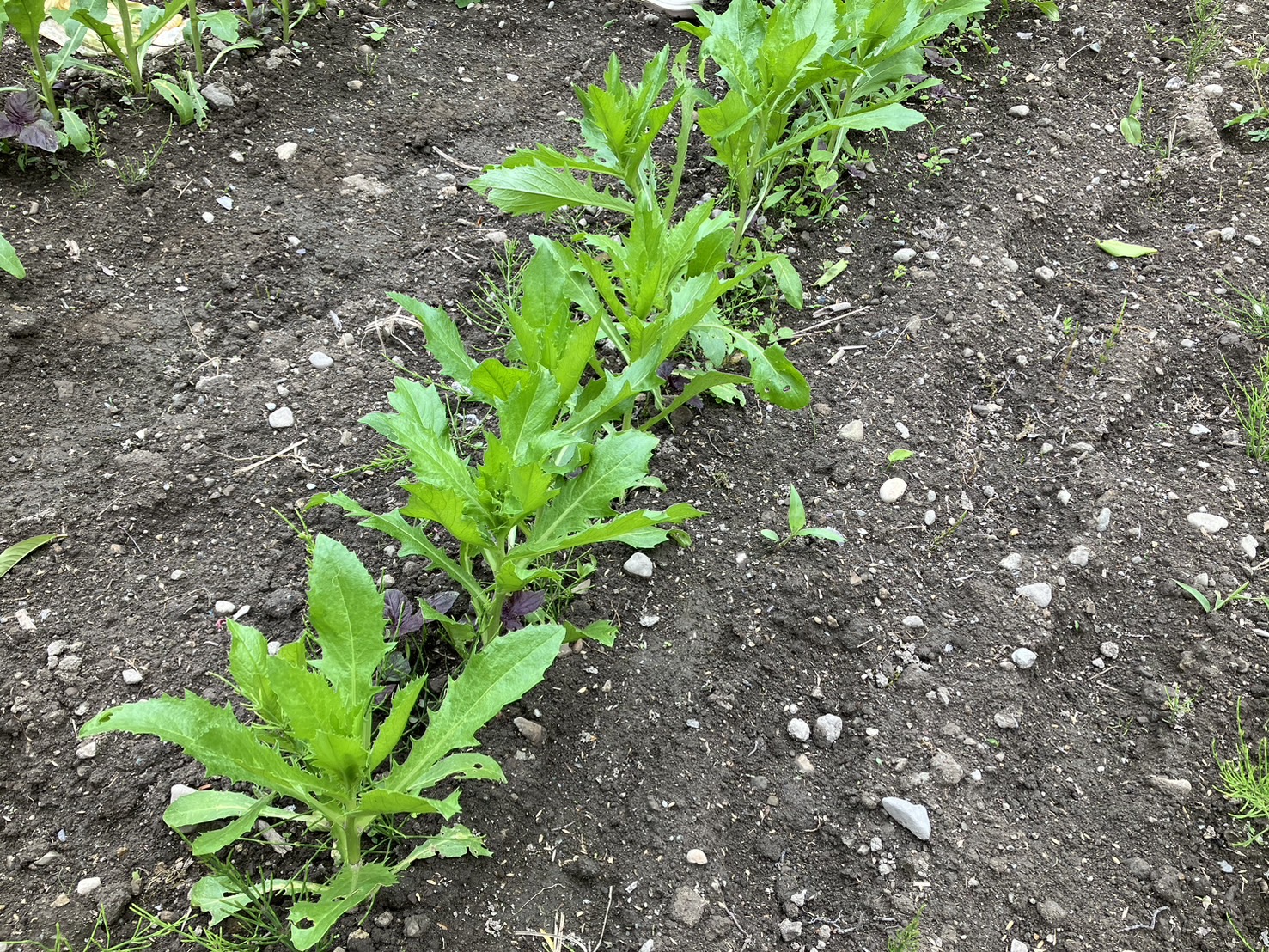
Safflower sprouts grow densely in the early stages of growth, so thinning is necessary to promote good growth.
In this experience, participants will receive guidance from members of the Takase Genki Association and will select healthy plants from among the small seedlings and thin them out.
Experience period
May to June every year
Time required
⏰ About 30 minutes
Number of applicants
Approximately 10 to 60 people
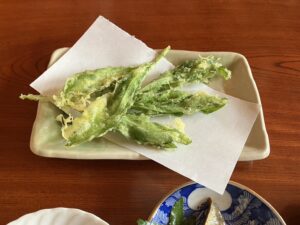
After farm work, the thinned young leaves are made into tempura.
Through this experience, you can learn the importance of facing nature and the importance of agriculture, which provides life.
*Flower picking experience available in July
4. Workshop ①
Experience period
All year round
Time required
⏰ Approx. 120 minutes (2 hours)
Number of applicants
Approximately 20 to 60 people
Contents
・Making safflower golden mochi
・Removing safflower seeds
・Making safflower tea [roasting]
・Draw safflowers by hand
・Safflower dyeing
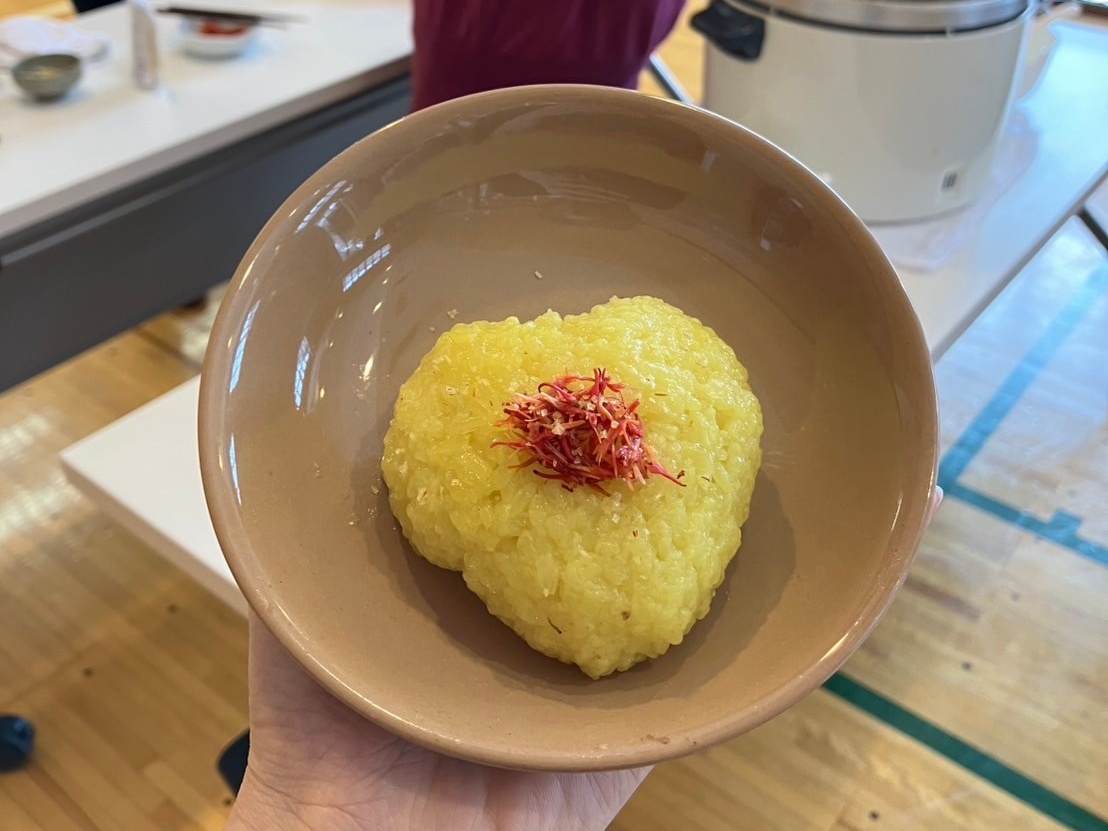
・Making safflower golden mochi
This is an experience where you can make your own beautiful golden mochi using safflower.
The rice cakes made with safflower petals are characterized by their subtle seaweed scent and elegant color.
You can deepen your understanding of the local nature and food culture while learning from local people.
Time required
⏰ About 15 minutes
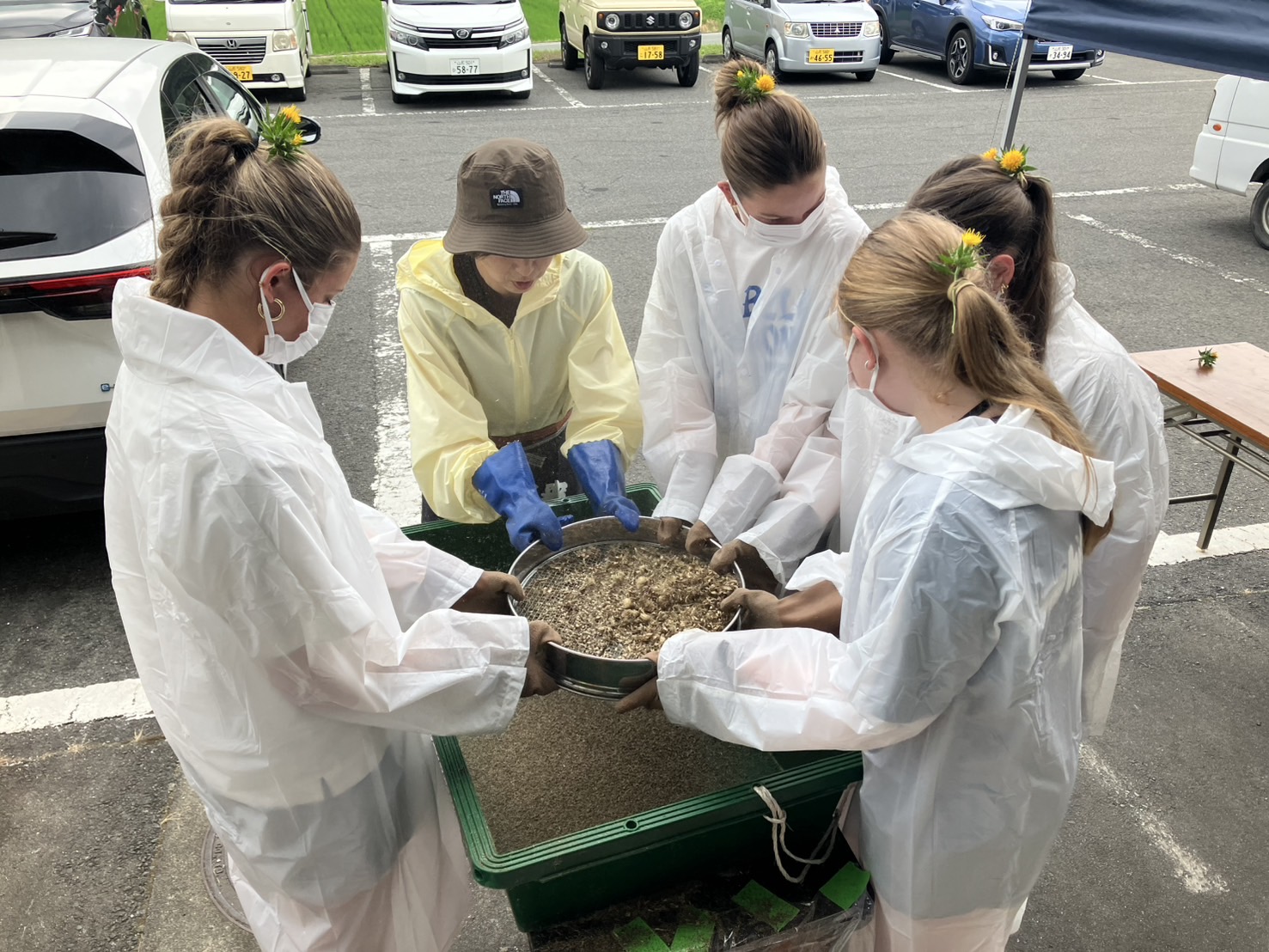
・Safflower seed collection
After harvesting, you will remove the seeds from each safflower by hand, learning about the cycle of nature.
You can deepen your understanding of the concept of circulation through the experience of passing on seeds to the next generation using traditional manual methods.
Time required
⏰ About 15 minutes
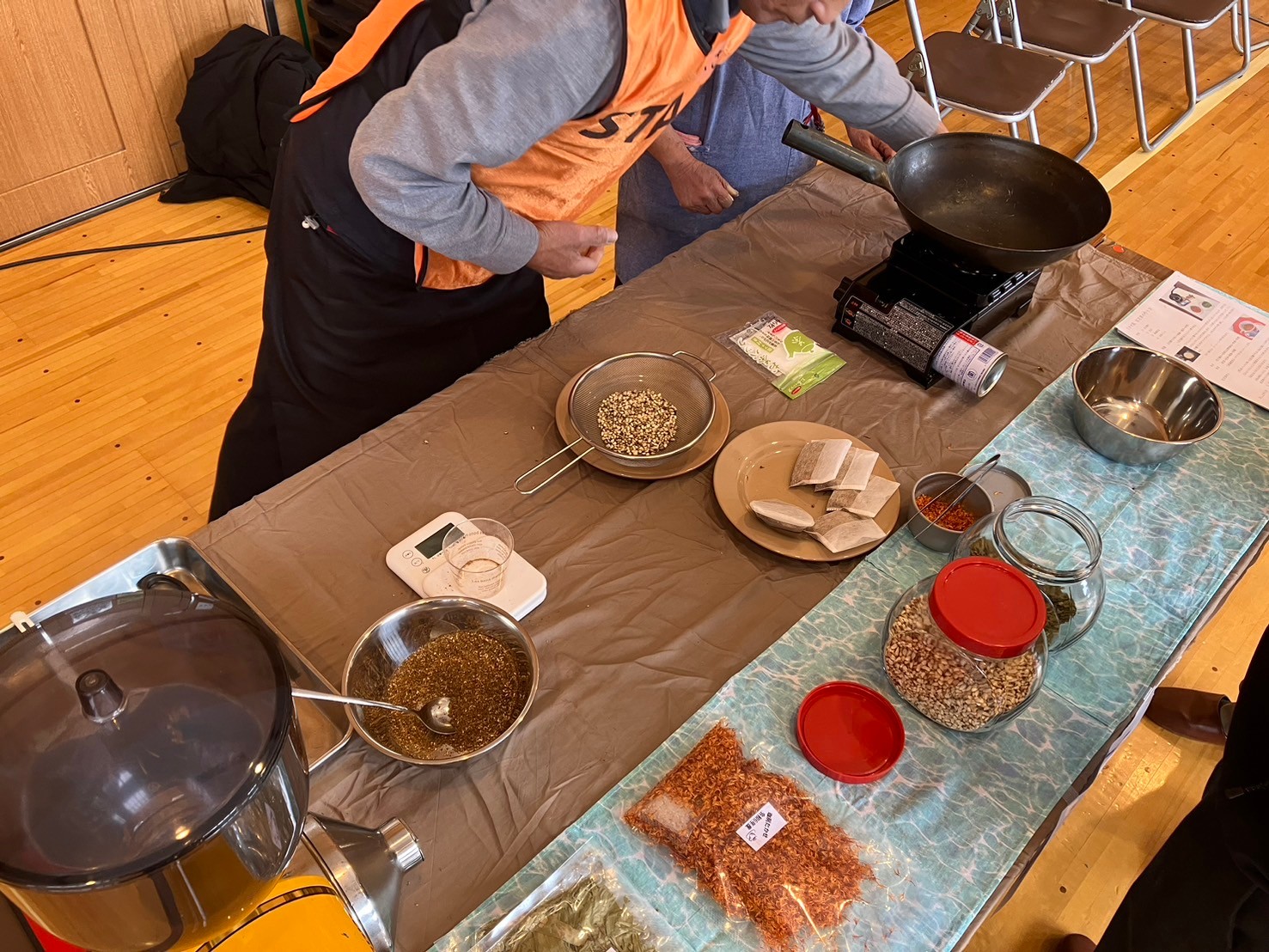
・Safflower tea making (roasting)
You will have the opportunity to try roasting safflower seeds.
By slowly roasting it by hand, you can enjoy the aroma of safflower and the blessings of nature with all your senses.
You can also think about food culture and agricultural cycles.
Time required
⏰ About 15 minutes
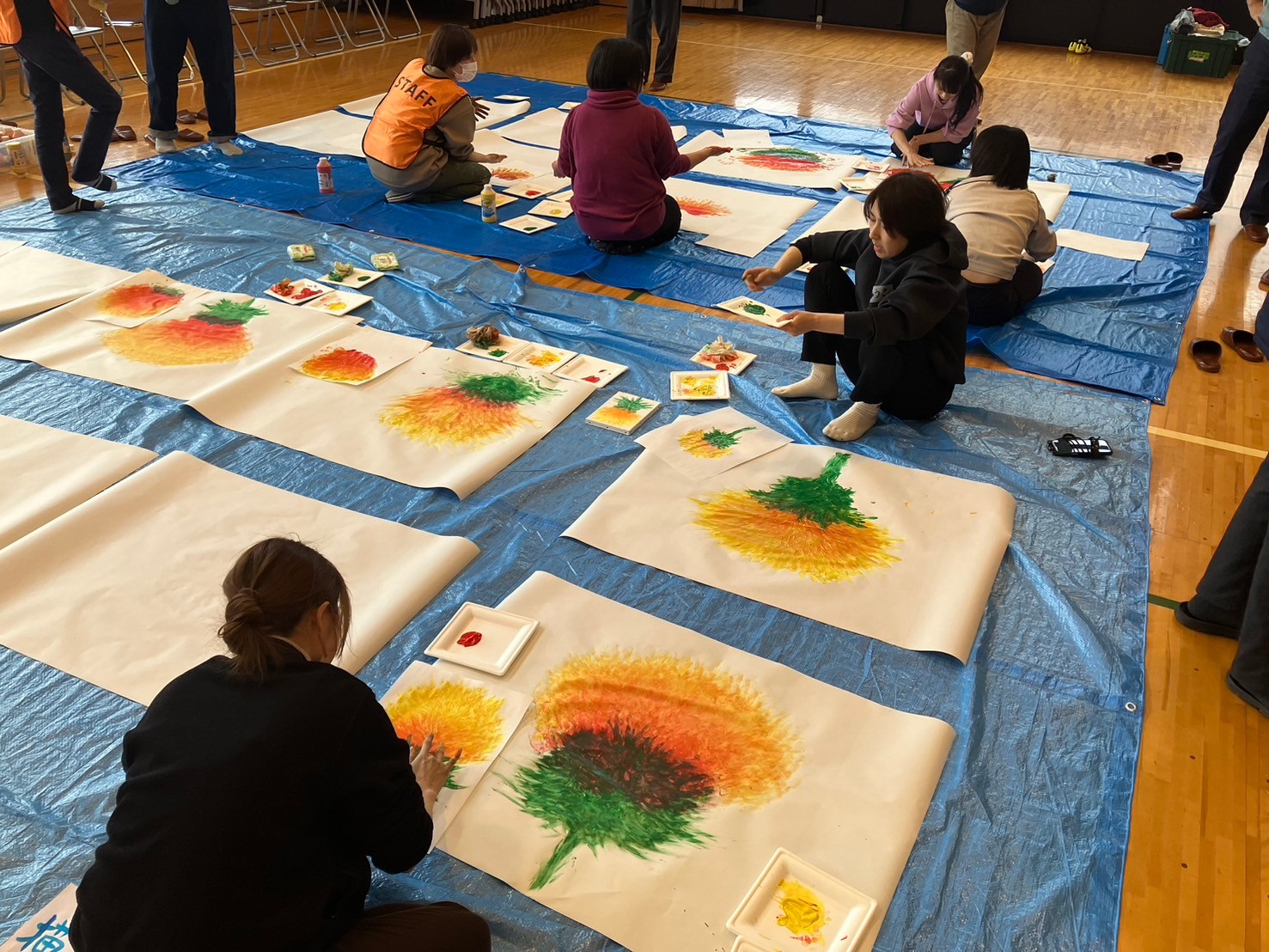
・Draw safflowers by hand
During the safflower blooming season, you will look at actual flowers, and at other times you will look at samples and photographs while picking up paints and freely painting safflowers.
Through the expressive activity of “drawing,” children can naturally observe and gain a deeper understanding of the color, shape, and structure of safflower.
In an age where smartphones are the norm, this experience of using your hands to feel and express yourself will be a valuable experience for children.
Time required
⏰ About 20 minutes
・Safflower dyeing
You will experience traditional dyeing techniques by extracting the precious red dye that only 1% of the safflower dye “beni mochi” can produce.
Using dyeing techniques that have been passed down through the generations, you can create a one-of-a-kind dyed item.
It’s a chance to experience the beauty and culture of safflower while experiencing the colors of nature.

Time required
⏰ About 120 minutes
5. Workshop ②
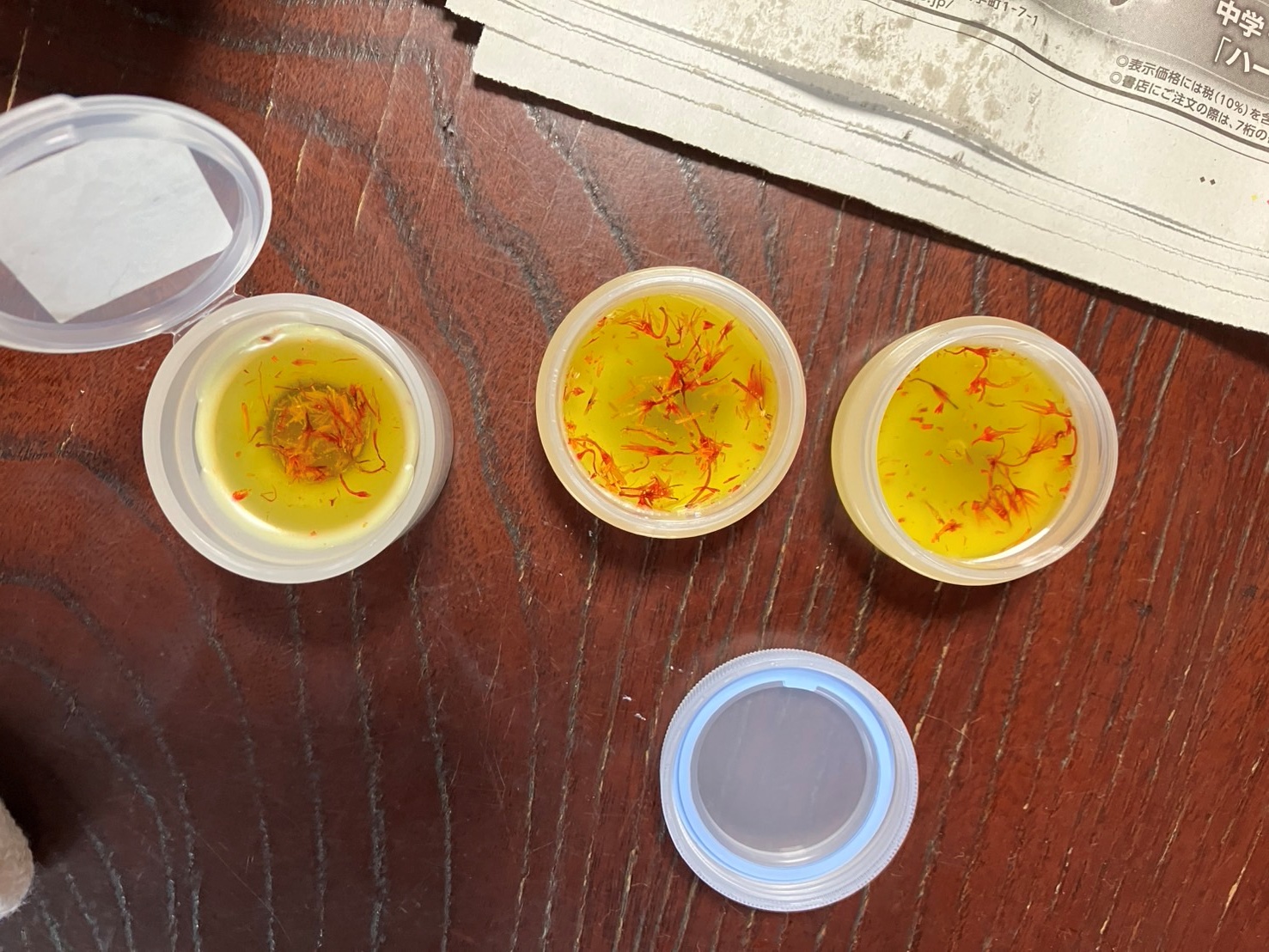
・Making safflower hand cream
This is an experience where you can make your own natural hand cream using dried safflower.
Safflower has long been used as a dye and cosmetic ingredient and is also said to have moisturizing and beauty benefits.
While learning about the history and uses of safflower, you can measure out the ingredients yourself and create your own original hand cream, allowing you to experience the appeal of making things that utilize the blessings of nature.
Experience period
All year round
Time required
⏰ About 20 minutes
Number of applicants
Approximately 10 to 60 people
6. Members of the Takase Genki-kai
We received a message from the Takase Genki-kai members.
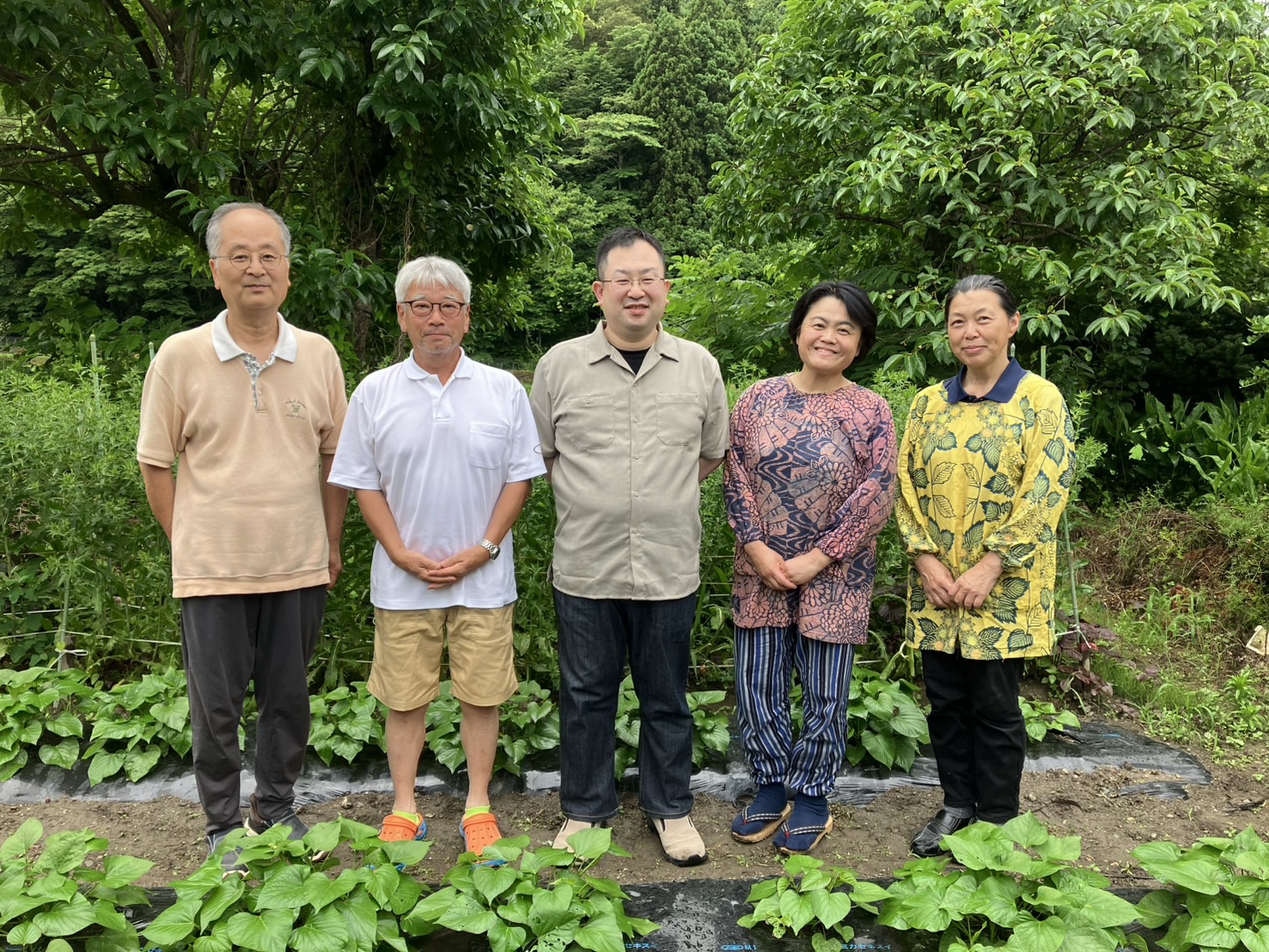
“We hope to create a fun workshop where people can participate while learning about the history and feelings that go into safflower, which has been useful in various aspects of life since ancient times.”
“We hope that your experience with safflower will be one of your most memorable experiences.”
7. Inquiry & Application

Full member of the All Japan Travel Agents Association, Yamagata Prefecture Governor Registered Travel Agency No. 2-295
Honcho Building 3F, 2-4-3 Honcho, Yamagata City 990-0043
TEL: 023-631-9522
FAX: 023-631-9533
Email: info@visityamagata.jp
[Hours] 8:30~17:15
[Closed] Weekends and holidays
Read together
![[Activity] Mt. Kumanodake & Okama in Winter! Go up Zao in snowshoes [2026][OPEN]](https://www.visityamagata.jp/wp/wp-content/uploads/2022/03/お釜トレッキング_お釜01.jpg)
[Activity] Mt. Kumanodake & Okama in Winter! Go up Zao in snowshoes [2026][OPEN]
![[Activity] Snowshoe Trekking at Zao! Snow Monsters with a guide [2026][OPEN]](https://www.visityamagata.jp/wp/wp-content/uploads/2021/01/o8889187c95ca4d973d8cf0c7a6b37d8d_64634470_210122_0012.jpg)
[Activity] Snowshoe Trekking at Zao! Snow Monsters with a guide [2026][OPEN]
![[Feature] Satoya! Make your own Japanese Sweets](https://www.visityamagata.jp/wp/wp-content/uploads/2025/11/satoya.jpg)
[Feature] Satoya! Make your own Japanese Sweets
![[Feature] Bed & Vegetable Kahoku! Experimental Hotel](https://www.visityamagata.jp/wp/wp-content/uploads/2025/08/BV.png)
[Feature] Bed & Vegetable Kahoku! Experimental Hotel
![[Activity] Apple Picking! Kosaku Orchard in Asahi Town](https://www.visityamagata.jp/wp/wp-content/uploads/2025/10/幸作りんご_aita-13.jpg)
[Activity] Apple Picking! Kosaku Orchard in Asahi Town